Thursday, 13 March 2014

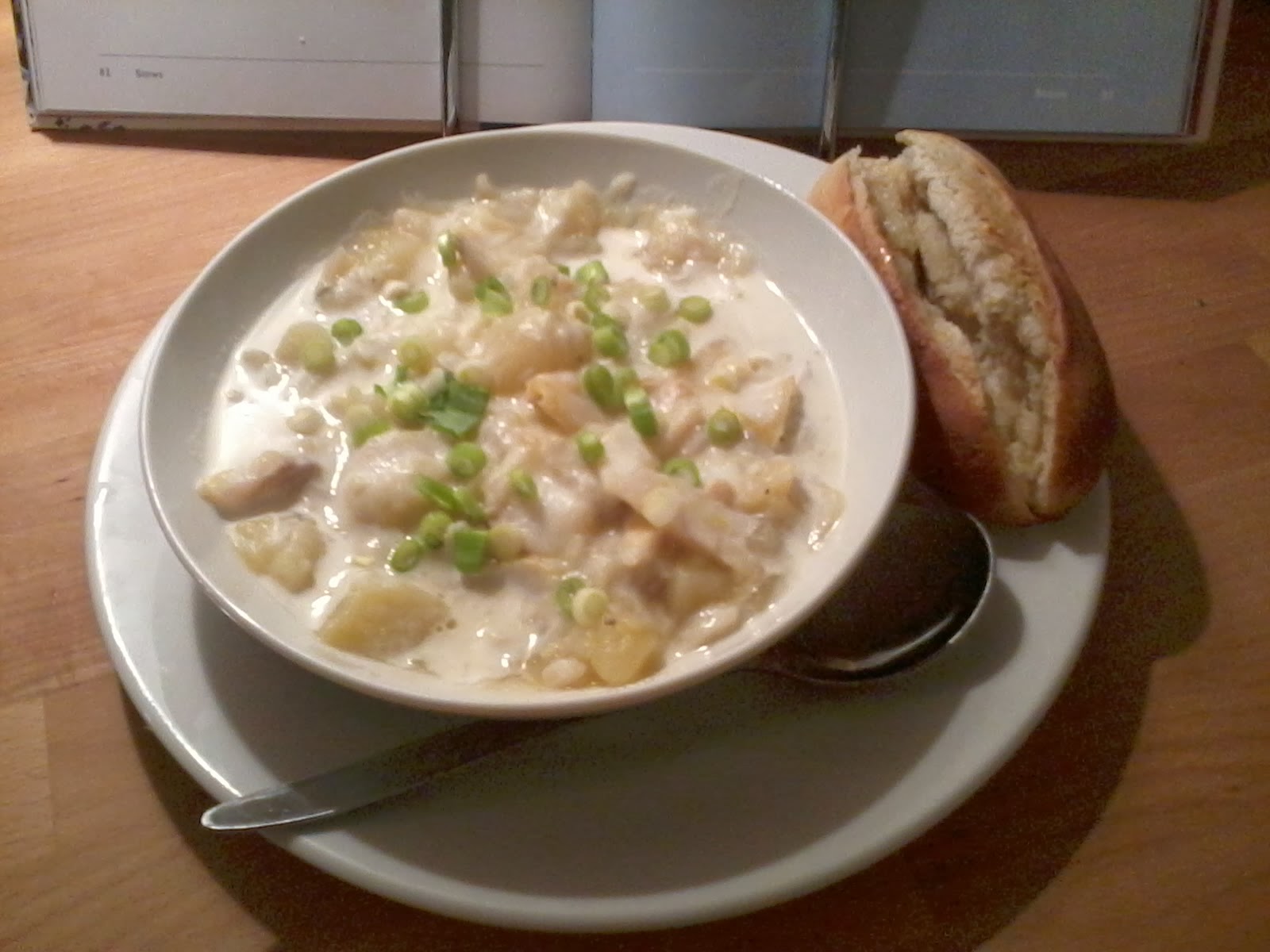
Week 11: Cullen skink

There are times when you’ll be in a fancy restaurant and you’ll see the name of a dish that you don’t recognise, something along the lines of assiette of chocolate or squash velouté and you’ll wonder why they didn’t just call it a plate of chocolate or just a thick squash soup, respectively. This kind of thing I can kind of understand, however, because the former does sound a bit nicer than the latter. But sometimes, when travelling about this sceptred isle, I’ll go into a country pub for a lunch and be confronted with something on the chalkboard menu I’ve not heard of before, something ill-sounding and straight from the pages of Lord of the Rings, and this is the case with cullen skink.

I mean, the name cullen skink gives absolutely no clues at all about what it is; what’s more, rather than commending it as a dish worth ordering, the name cullen skink makes it sound distinctly unappetising and something more like a poisonous mushroom or a disease that afflicts badgers than the kind of thing you’d have while in a pub on the Scottish coast.
So, it’s with an adventurous spirit of discovery and curiosity that I embark upon this smoked haddock soup (sounds better already, no?), not too  dissimilar from a North American chowder, something we all know about and easy to find on the menu boards of Britain. A bit of rebranding required, perhaps?
Ingredients:
400g smoked haddock
700g floury potatoes, peeled and cut into cubes
1 small onion, sliced
100ml single cream
1 bay leaf
Salt
A few peppercorns
2 spring onions, very finely sliced

Put the smoked haddock, sliced onion, bay leaf and peppercorns in a pan and cover with water. Heat and leave to simmer for about 10 minutes or until the fish is cooked. Remove it from the pan (keep the cooking liquid).
When the fish has cooled enough to handle, remove all the skins and bones (if not already done).  Flake and flesh and set on one side. Return the bones to the pan, cover and simmer for about 30 minutes longer to make stock; strain and measure it – you’ll need about 600-700ml. If you got your fish without the skin (which I reckon you probably did), pop a little fish stock into the mixture or, failing that, some veg stock. Top up with extra water if necessary when getting the liquid up to 600-700ml.
Put the stock and the potatoes into a clean pan and bring to the boil. Let them simmer until the potatoes are well cooked and just starting to break up a little, giving body to the liquid. Stir in the fish and head through. Taste and add more salt if desired; remember, the smoked fish may be quite salty already! Now, stir in the cream.
Divide between four bowls and scatter with the sliced spring onion and serve with some hot bread. A very tasty lunch or light dinner dish and perfect for seaside boozers.
Today’s learning:
What’s in a name? Cullen skink still tastes as good though called by any other name. And it is good.

Recipe taken from: Mason, L. & Paston-Williams, S. (2013) Grandma’s Cookbook: Recipes inspired by the National Trust. London: National Trust Books

Monday, 10 March 2014

Week 10: Veal and ham pie

Veal is a meat I’ve never cooked with, partly because of the concern of calf welfare and partly because not too many recipes call for it. However, being assured of the free-range nature of veal calves these days I thought I would cook up this recipe from Grandma’s Cookbook. Another reason for cooking it is that I always seem to read about veal of some cut or other in Dickens’ books (although normally pronounced with a /w/ instead of a /v/). One of my favourite passages is when David Copperfield is trying to not to look naïve when ordering food in a pub:

'Well now,' said the waiter, in a tone of confidence, 'what would you like for dinner? Young gentlemen likes poultry in general: have a fowl!'
    I told him, as majestically as I could, that I wasn't in the humour for a fowl.
    'Ain't you?' said the waiter. 'Young gentlemen is generally tired of beef and mutton: have a weal cutlet!'
    I assented to this proposal, in default of being able to suggest anything else.
    'Do you care for taters?' said the waiter, with an insinuating smile, and his head on one side. 'Young gentlemen generally has been overdosed with taters.'
    I commanded him, in my deepest voice, to order a veal cutlet and potatoes, and all things fitting;
David Copperfield: chapter 19

But why the selection of veal and ham pie? Well, a mix of recently reading it in Dickens’ Our Mutual Friend and also because it caught my attention as sounding particularly tasty, both in Our Mutual Friend and in the cook book.
DO my eyes deceive me, or is that object up there a — a pie? It can't be a pie.'
    'Yes, it's a pie, Wegg,' replied Mr Boffin, with a glance of some little discomfiture at the Decline and Fall.
    'HAVE I lost my smell for fruits, or is it a apple pie, sir?' asked Wegg.
    'It's a veal and ham pie,' said Mr Boffin.
    'Is it indeed, sir? And it would be hard, sir, to name the pie that is a better pie than a weal and hammer,' said Mr Wegg, nodding his head emotionally.
    'Have some, Wegg?'
    'Thank you, Mr Boffin, I think I will, at your invitation. I wouldn't at any other party's, at the present juncture; but at yours, sir! — And meaty jelly too, especially when a little salt, which is the case where there's ham, is mellering to the organ, is very mellering to the organ.' Mr Wegg did not say what organ, but spoke with a cheerful generality.
Our Mutual Friend: chapter 5

But laying your hands on veal isn’t as easily done as you might think – not even the mighty Morrisons could help. It took a search on the internet and a cycle to the butcher’s in posh Chiswick to supply me with the required veal. The butcher’s in Chiswick is a palace to different types of meat and is of the variety of butcher’s that you might imagine in English country towns in Miss Marple stories, red awning out the front and a queue of people waiting patiently to be served and talking to each other in voices so posh you would think they were parodying themselves, saying things like, “oh and what are you doing here?” [fairly obvious, it being a butcher’s] and, “Yes, Darcey’s gone back to Geneva for the rest of the season”.
My own dialogue in the shop was, rather pleasingly, not unlike the exchange you’d expect to find between an inexperienced youth and an aged, slightly gruff and confident shop keeper in one of Dickens’ own books:
Butcher: What’ll you have?
Me: Some veal please [confidently stated].
Butcher: What cut?
Me: Leg or loin [Equally as confident - I was prepared for this question].
Butcher: There you go [pointing to some meat on the bone], there’s your leg.
Me: [thinking about which was best for a pie now confronted with the piece of leg in question] Do you have any loin [doubt creeping into my voice]?
Butcher: Loin? [surprise] Loin? Well, er, what are you going to be doing with it, if you don’t mind my asking, sir? [the term of address for polite form only, as there was no doubt who was in control]
Me: Sticking it in a pie [not prepared for the inquisition, I reverted to a base description].
Butcher: Well then, yes, this is what you’ll be after; your diced veal [said as he removed a lid from a tray of meat, previously hidden to my eyes]. How much you after?
Me: About 400g [now put in my place as the least knowledgeable in the exchange].

The exchange complete, as I took the veal I got a smile and a wink, which felt like a sign of encouragement for future ordering. This at the age of 37. I almost heard the butcher thinking to himself ‘he’ll get better at this with some proper training’ as I left the shop.  I could’ve sworn he pronounced ‘veal’ with a /w/ instead of a /v/, too.
Ingredients:
400-500g veal (loin or leg)
Puff pastry (enough to cover the top)
100-150g cooked ham (in one piece)
Flour for dusting
2 hard boiled eggs
Beaten egg, cream or milk to glaze
1 generous tablespoon of chopped parsley
For the forcemeat
Chopped thyme leaves from winter savory
200g spinach
15-20 large leaves basil, torn into pieces
200g breadcrumbs from fresh white bread
2 bay leaves, spines removed and shredded
55g bacon (unsmoked)
Pinch of cinnamon
½ tsp salt
125ml well-reduced stock – veal for preference, otherwise chicken
1 egg
Salt & pepper

Cut the veal, ham and hard-boiled eggs into thin slices. Mix together the parsley, winter savory or thyme leaves, half the basil leaves and the bay leaves. Add the cinnamon, salt and pepper. Toss the veal pieces in this and put to one side.
Put the spinach in a pan; the only water it will need will be that left on the leaves from washing it. Put it over a medium heat with a lid on. Stir until wilted, then tip it into a sieve and press well to remove excess water. Put it together with the breadcrumbs, bacon, remaining basil leaves and salt into a food processor then blend to a paste. Add the egg and process just enough to mix.

Take a deep pie dish and put a layer of ham in the base. Cover this with some of the forcemeat. Add the slices of hard-boiled egg, then more of the forcemeat, then the veal, interspersed with any remaining forcemeat. Pour in the stock.
Roll out the puff pastry and cover the dish. Glaze with beaten egg, cream or milk. Cook in a pre-heated oven for 2o minutes at 220ᵒc. Reduce heat to 180ᵒc and cook for a further 45 minutes to one hour.

Today’s learning:
This cold pie is just as delicious cold as hot, although maybe takes a white wine better cold. And it’s tasty. Mr Wegg wasn’t wrong!

Recipe taken from: Mason, L. & Paston-Williams, S. (2013) Grandma’s Cookbook: Recipes inspired by the National Trust. London: National Trust Books


Tuesday, 4 March 2014

Week 9: Orange cake with pomegranate syrup and orange cream

This orange cake is one that I’ve been eyeing up for a while. I first saw it a few weeks ago but thought that I’d wait until I got some oranges fresh from my recent trip to Southern Spain, an area which is currently awash with oranges. I mean they’re just everywhere. In the interest of BBC-like total transparency and openness, I should say that the picture of me with oranges was in fact taken last year in February. The image had I taken one this year would have been much the same, though. Except I’d have been one year older, of course.

This is a very tasty one and is good by itself but with the cream is amazing. I over-cooked the syrup a  little (see below), and I think that had I got that right it would have been beyond tasty!


finely grated zest of 3 oranges
250g plain flour
5 tbsp freshly-squeezed orange juice
2tsp baking powder
100 ml sunflower oil
200g caster sugar
120 ml milk
100g ground almonds
3 eggs


pomegranate syrup
120 ml pure pomegranate juice
85g caster sugar
knob of butter
Juice 2 small oranges
pomegranite seeds (to decorate)

orange cream

175g mascarpone cheese
50g icing sugar
5 tbsp double cream
Finely grated zest of 1 orange

Grease and line a 23cm springform cake tin with baking parchment and pre-heat the oven to 180ᵒc. In a jug mix together the orange zest, orange juice, oil and milk. Then beat in the eggs.

Sift together the flour, baking powder and sugar then stir in the almonds. Make a well in teh centre the pour in the orange mixture and beat with an electric whisk until smooth and well mixed. Transfer to a prepared tin and level the surface.

Cook for about one hour (cover with foil if browning) or until a skewer comes out clean. Cool slightly then remove from the tin.

While it’s baking, make the syrup and cream. For the syrup gently heat the juices until the sugar has dissolved. Bring to the boil until reduced slightly and syrupy. Be careful that you don’t reduce it too much and heat it too much or else it’ll turn into a type of pomegranate toffee – tasty enough but not right here. Whisk in the butter, pout into a jug and set aside.

Make the cream by beating the mascarpone, double cream and icing sugar until very smooth. Now stir in the orange zest and chill until required. This stuff is gorgeous!

Serve a slice with a good dollop of cream an d a drizzle or syrup. Sprinkle with pomegranate seeds to decorate.

Today's Learning:
It's all so tasty, what to say? The mascarpone, cream and icing sugar with orange zest is amazing. Serve it with any dessert that could take a zingy cream.

Recipe taken from: BBC Masterchef (2012) MasterChef Everyday. London: Dorling Kindersley Limited

Tuesday, 25 February 2014

Week 8: Grilled pork chop with almond croquettes and salad

This week I’m in a different, much larger kitchen (pictured) as a result of visiting my father in southern Spain. Now I don’t know if you find this, but when cooking in someone else’s kitchen, it’s either a joy (when you find all the utensils you’re after) or problematic (some knives just aren’t up to the job), but rarely is it uninteresting. 

So, in Spain as I say and one thing never cooked, although frequently eaten when here, are croquettes. There are fishy ones, meaty ones and also simple plain ones, but never have I had almond croquettes. This recipe comes from the BBC website and happened to be the one featured on the main ‘food’ page when I popped onto it on my first day out here and comes with a suitably Spanish accompaniment.
2 pork loin chops
1 apple, cored and cut into wedges

almond croquettes
50g/1¾oz plain flour
500g/1lb 2oz mashed potatoes
1 free-range egg, beaten
1 tbsp finely chopped flatleaf parsley
75g/3oz flaked almonds

dressing & salad
1 garlic clove, finely chopped
1 free-range egg yolk
1 tbsp finely chopped flatleaf parsley
1 tsp English mustard
1 tbsp finely chopped mint
2 tsp clear honey
1 tbsp finely chopped basil
2 tbsp cider vinegar
1 tbsp finely chopped thyme
150ml/5fl oz vegetable or sunflower oil
1 head Little Gem, roughly chopped
1 banana shallot, finely chopped
2 handfuls lamb’s lettuce

Preheat the grill to high. Place the pork chops in an ovenproof frying pan along with the apple wedges, then season the pork fat with salt and place under the grill for 10 minutes.

Meanwhile, make the dressing. Place the egg yolk into a bowl along with the mustard and honey. Add the cider vinegar and whisk, then gradually add the vegetable oil, whisking all the time until thick and creamy. Add the shallot, garlic, parsley, mint, basil and thyme and whisk once more, then check the seasoning and set aside.

Check the seasoning on the mashed potatoes, then add the remaining flatleaf parsley and mix well. Take a small handful and roll into a sausage shape (mind you don’t make them too big or there’ll be a bit dry on the eating), repeat with all the mash. Roll the potato sausages in the flour, then the eggs and then the flaked almonds.

Heat the oil in a suitable saucepan – drop a bit of almond in to check the temp; when it sizzles away you’re good for frying. Now remember to be careful with the hot oil, it will hurt a lot if you get it on you! Place into the hot oil for 2-3 minutes, or until golden-brown and crisp, then remove using a slotted spoon onto some kitchen paper.

Place the salad leaves into a bowl and add enough dressing to just coat the leaves, then serve alongside the croquettes and pork chop You’ll probably want drizzle some of the dressing over the croquettes too – it’ll make everything taste good.

Today’s learning:
Croquettes are tasty and easy – shallow-fired mash. Just make them. But err on the side of smaller than big to stop them from being too dry.


Sunday, 16 February 2014

Week 7: Carrot cake

I had it my mind this week to bake a cake. I’m not sure why I had this thought floating around my cerebrum, but there it was all the same. Perhaps it was the fact that it’s been a while since I cooked something sweet rather than savoury (back to Week 1 of this personal cooking challenge) or that the Orange Cake in my new Master Chef Everyday cookbook looks tasty enough to eat every day for a year. It may have even been the particular alignment of the moons in the heavens this week, but, without wishing to side-step the matter, this isn’t the place to philosophise about such things.

The fact is I decided to bake a cake. It was going to be the orange one, one which I thought I’d take to my convalescing friend Richard (broken leg after an incident combining beer, gravity and stairs – Rich and Jimmy pictured below) but it turns out that his favourite cake is carrot cake, a cake I’d never made before! So, a quick trawl of the internet and I get to Felicity Cloake’s How to make the perfect carrot cake from the Guardian website. This is a tremendous cake and as light and fluffy a carrot cake as you could hope to have, beats anything you’ll find in a shop and will even be a nose ahead of the tasty ones you find in those posh cafes in ‘up-and-coming’ areas of London. I will be making it again – rarely have I seen such wedges of cake gobbled up with quite so much alacrity.

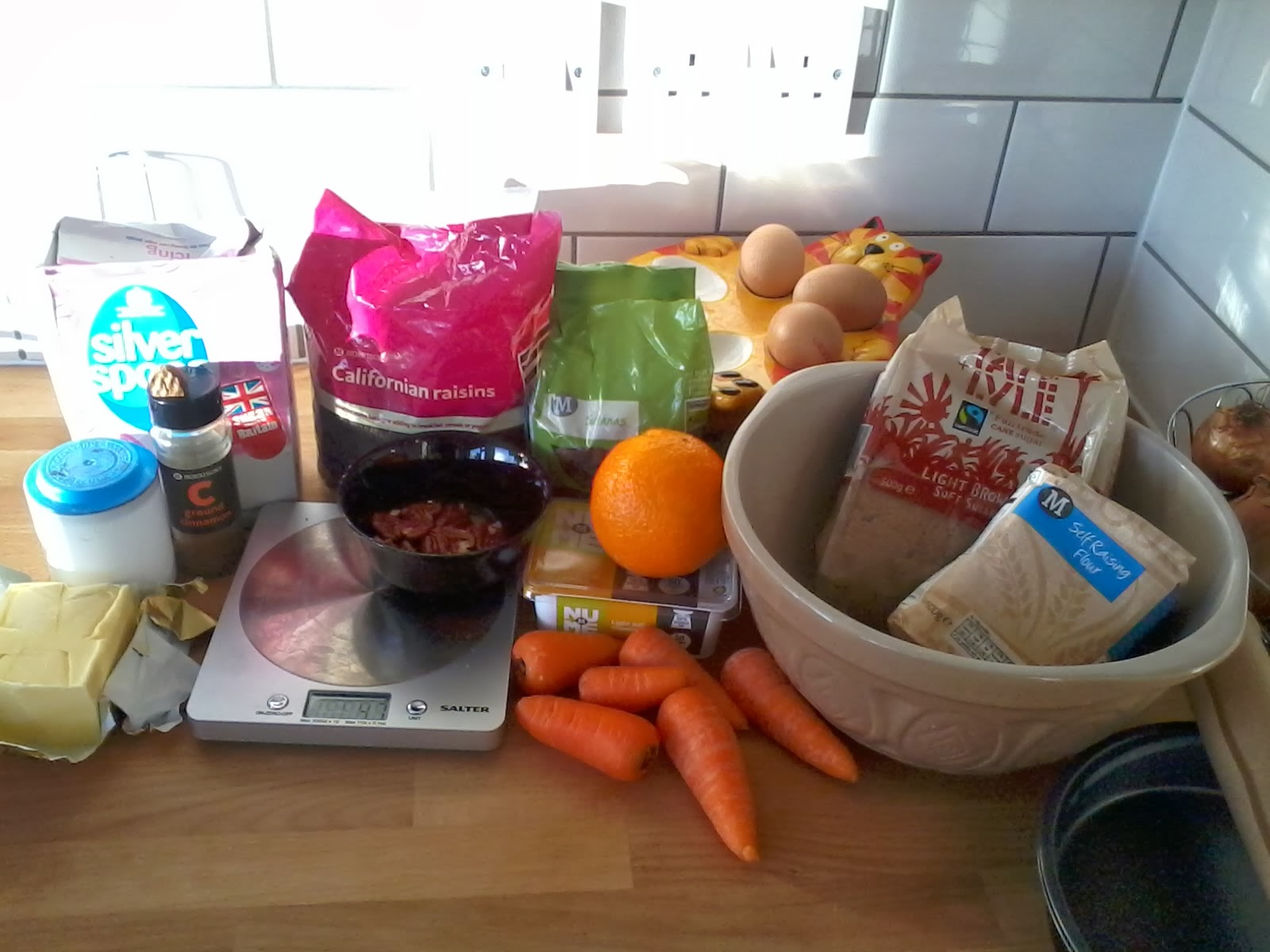
150g butter, melted, plus extra for greasing
1 tsp ground cinnamon
150g soft light brown sugar
½ tsp grated nutmeg
3 free-range eggs
Zest of 1 orange
200g self-raising wholemeal flour
100g sultanas or raisins (I had a mix of both)
1 tsp bicarbonate of soda
200g carrots, peeled and grated
½ tsp salt
100g pecans, toasted and roughly chopped, plus extra to decorate

For the icing:
50g light brown soft sugar
150g full-fat cream cheese
Zest of ½ lemon and a squeeze of juice

Preheat the oven to 180ᵒC and grease and line the bases of 2 x 18cm sandwich tins

Put the melted butter, sugar and eggs into a large mixing bowl and whisk well until the ingredients are thoroughly combined and the mixture has almost doubled in volume – this will make it super light and fluffy.

Sift together the flour, bicarb, salt and spices and then fold very gently into the liquid mixture, being careful to knock as little air out as possible. Fold in the remaining ingredients and divide between the tins. Bake for about 30 minutes until a skewer inserted into the middle comes out clean. Keep an eye on it from 20 mins as you may find them browning up a little early. Cool in the tins.

Meanwhile, beat the icing ingredients together and refrigerate. When the cakes are cool enough to ice, remove from the tins, top one with half the icing, and then the other cake. Ice the top, and decorate with the remaining pecans. With the icing, consider ‘less is more’. It’s tasty stuff but the cake is pretty much good enough to eat on its own.
Today’s learning:
Whisking the melted butter, eggs and sugar together helped make the mixture amazingly light and moist, although this may have been the moisture from the carrots too.

Wednesday, 12 February 2014

Week 6: Smoked haddock and pancetta soufflé

Although there’s been a little gap since the last post, I think I’m just in time for my weekly challenge. On Sunday last I cooked a smoked haddock and pancetta soufflé – yes, a soufflé! But why the delay? Well, there was a slight issue of having a new kitchen fitted which caused the upheaval you see on the left and the reincarnation you also see (lower left) and which was the setting for this latest gastronomic experiment.

This recipe comes from MasterChef Everyday, a collection of tasty dishes which have been placed in a realm ranging from relatively easy (baked apples) to particularly tricky (rabbit ballotine and offal sausage, offal toasts, parsnip puree, radishes, and mustard cream sauce). So, opting for something never cooked before but possible to cook up in a new kitchen yet to be tried and tested, I opted for the soufflé. I couldn’t get any pancetta (only the local shop was open), so I used bacon instead. All-in-all a touch tricky but very good – fine starter dish. I had mixture left over so popped it in the fridge and ate it on the next day. It didn’t rise quite so well on the second day, but rise it still did and just as tasty it was too! This recipe makes 6.
Softened unsalted butter for greasing
1 small white onion, finely chopped
75g fine white breadcrumbs
225g undyed smoked haddock
75g parmesan cheese, finely grated
50g pancetta (or bacon!)
300ml whole milk (semi-skimmed also fine)
2 tsp chopped chervil (I couldn’t get his)
2 sprigs of parsley
2 tsp chopped dill (or this, either)
1 bay leaf
Knob of unsalted butter
Salt and freshly ground black pepper
40g plain flour
½ teaspoon of grated nutmeg
40g butter
Zest of ½ a lemon
4 large eggs, separated
Pre-heat the oven to 190c, pour water into a roasting tin to 2cm depth and butter the inside of 6 ramekins. Combine the breadcrumbs and parmesan and coat the insides of the ramekins – there’s plenty of mixture so you can have about 5mm or more of breadcrumbs and parmesan at the bottom of the ramekin. Pop in the fridge until needed.

Put the milk, parsley, bay leaf, pepper, nutmeg, lemon zest and onion into a wide pan. Bring to a gentle simmer and then lay the haddock in the milk. Cover with a lid and poach for 5-10 minutes. When the fish is ready, it’ll break apart easily. Set aside to cool a bit and then, removing skin and any bones, flake the fish apart with a fork.
Meanwhile, sauté the pancetta/bacon in butter for 5 minutes and then drain on kitchen paper.
Strain the milk for the poached fish through a sieve, discarding parsley and bay leaf but keeping the rest. Mix the fish, onion mix, pancetta, etc. and the chopped herbs (if used) together.

Make a roux with the butter and flour and then slowly add the milk, stirring as you go. Heat gently for 10 minutes to thicken up. Whisk in the egg yolks and then add the fish mixture, stirring it in. Season to taste.

In a separate bowl, whisk the egg whites to soft peaks. Put a spoonful of the whites into the fish mix to loosen it, then fold in the remainder. Divide the mixture between the ramekins and smooth over the top. Place in the prepared roasting tin and cook for 15-20 minutes / until they’re golden on top. Serve immediately!
Today’s learning:
The soufflé business itself is fairly straight forward – just whipping up of eggs and folding in some tasty ingredients and popping into a buttered ramekin.  Try it with different mixes although the haddock infused milk is particularly good.

Recipe taken from: BBC Masterchef (2012) MasterChef Everyday. London: Dorling Kindersley Limited